
hello@allmediatransfers.uk
Mon–Fri, 9am–5pm
Call Us
Guides

File formats & delivery options, explained simply.

Two decisions on the order form trip people up more than any other: which video format to choose, and how to receive the finished files. Here's what actually matters.
Experienced Technicians
Professional Grade Hardware
All orders treated with the upmost care
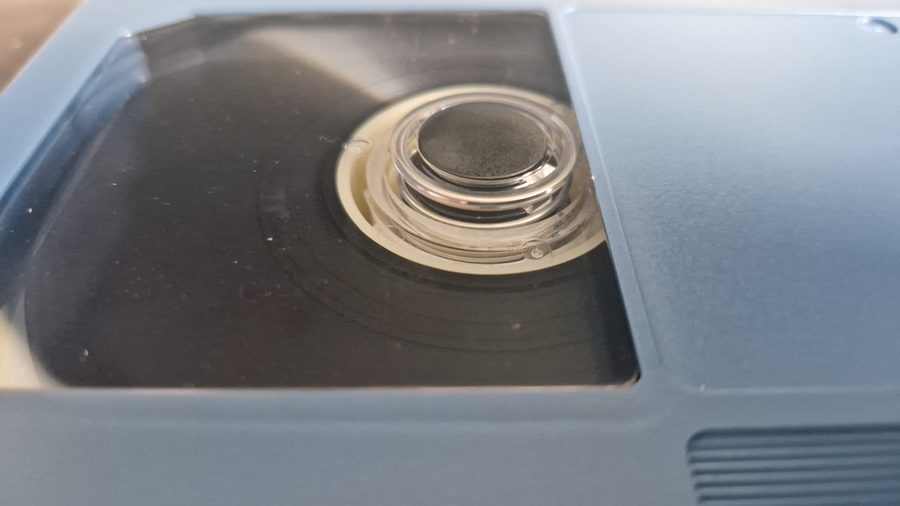
Close-up of a tape reel mechanism
We accept damaged, mouldy or unplayable tapes
Typical turnaround: 1–2 weeks
Thousands of tapes digitised
Originals returned with every order
Video File Formats

H.264, H.265, and when to ask for a master file.

By default, we deliver your files as H.264 (MP4), the most widely compatible video format available. It plays on virtually any phone, computer, smart TV or media player without needing any extra software — which is exactly why it's our recommended setting for most customers.

H.265 (HEVC) is a newer format that compresses video more efficiently, producing a smaller file at similar visual quality. The trade-off is compatibility: it needs a reasonably modern device or up-to-date software to play smoothly, so it suits customers who are comfortable with technology and want smaller files, rather than the widest possible compatibility.

If you're planning to edit your footage — for a family video project, a documentary, or professional work — a compressed delivery file isn't the best starting point. An uncompressed or ProRes master file preserves far more detail for editing software to work with. This is available on request; just mention it in your order notes.

Which should I choose?

  • Not sure, or just want it to work?H.264 (MP4) — our default, plays everywhere.
  • Want smaller files, comfortable with tech?H.265 (HEVC).
  • Planning to edit the footage?Ask for an uncompressed or ProRes master.
Delivery Options

Why we'd steer you away from DVD, if quality matters to you.

DVD is still available as a delivery option, and plenty of people are comfortable with it. But it's worth understanding its real limitations before you choose it for footage you want to keep long-term.

DVD-Video is a standard-definition format, capped at a maximum resolution of 720×576 (UK PAL). Even if your tape is captured at higher quality, burning it to DVD compresses and downsizes the file to fit that limit — permanently discarding detail in the process, not just for that copy, but for good. On top of that, DVD playback hardware is quietly disappearing: most new laptops, smart TVs and streaming setups no longer include a DVD drive as standard, so a DVD you receive today may become genuinely difficult to play in years to come.
Free

Cloud Storage

Delivered at full captured quality via a private download link. Convenient for quick access, sharing with family, and backing up elsewhere.

+£8*

Flash Drive

Delivered at full captured quality on a physical USB drive. Plays on any modern device with a USB port, no special drive required, and gives you an offline copy.

+£5*

DVD

Still useful if you specifically need to play files in an existing DVD player, but limited to standard-definition quality and reliant on hardware that's becoming less common.

*Indicative pricing, confirmed as part of your quote.

Get Started

Ready to choose your format and delivery option?

You can select your preferred file format and delivery method directly on the order form — and change your mind later if you're not sure.

Questions

File format & delivery frequently asked questions.

What is the difference between H.264 and H.265?+
H.264 (MP4) is the most widely compatible video format, playing on virtually any device without issue. H.265 (HEVC) compresses video more efficiently, producing smaller files at similar quality, but needs a reasonably modern device or software to play smoothly.
Why is DVD not a good choice for preserving video quality?+
DVD-Video is a standard-definition format, limited to a maximum resolution of 720x576 (UK PAL). Even if your tape is captured at a higher quality, burning it to DVD compresses and downsizes that file to fit DVD-Video's technical limits, permanently discarding detail in the process.
Are DVD players still common?+
Increasingly not. Most new laptops, smart TVs and streaming devices no longer include a DVD drive as standard, which means a DVD you receive today may become harder to actually play in the years ahead.
Should I choose flash drive or cloud storage?+
Both preserve your files at full captured quality and play on virtually any modern device. Cloud storage is convenient for quick access and sharing, while a flash drive gives you a physical, offline copy. Many customers choose both for extra peace of mind.
What format should I request if I want to edit my footage later?+
If you plan to edit your footage in software like Premiere Pro or Final Cut, an uncompressed or ProRes master file is a better starting point than a compressed delivery file. This is available on request, please mention it in your order notes.